As organisations move beyond simple AI assistants, many are discovering that a single agent is not enough. Complex workflows often require multiple specialised agents working together to achieve reliable outcomes.
This is where Agent2Agent (A2A) comes in.
A2A is an interoperability framework designed to help AI agents communicate, coordinate and delegate work between one another. Rather than building increasingly complex monolithic agents, organisations can create modular systems where individual agents focus on specific responsibilities.
The benefits are significant. Teams can independently develop, test and scale capabilities while maintaining flexibility across their AI architecture. Agents can discover one another, exchange information and collaborate dynamically to complete tasks.
A typical A2A implementation relies on three core concepts:
- Agent Cards that describe capabilities
- Tasks that manage workflow execution
- Messages that enable structured communication
These building blocks support a variety of orchestration models. Some organisations use a central orchestration agent that delegates work to specialists. Others adopt more flexible mesh architectures where agents can collaborate directly.
As agentic systems become more sophisticated, security becomes increasingly important. Strong authentication, agent verification, governance controls and protection against prompt injection attacks are essential for safe deployment.
For organisations building enterprise-scale AI solutions, A2A offers a practical way to manage complexity, improve extensibility and create systems capable of adapting to changing requirements.
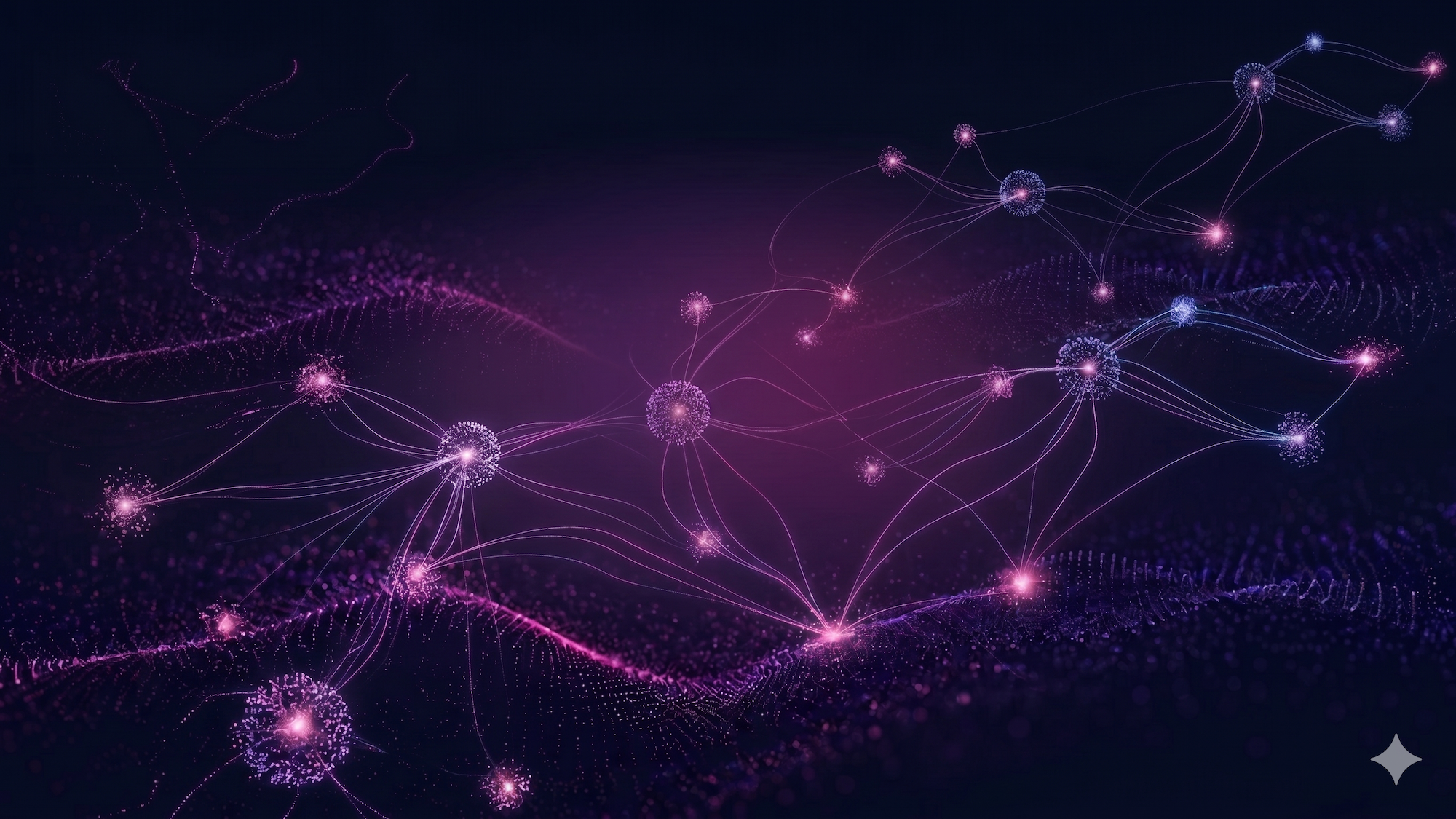
The future of AI may not be a single intelligent agent, but a coordinated network of specialised agents working together.
Read the full article at thinknimble.ai